Wholesale purchasing
Wholesale electric bike buying guide & procurement checklist.
A procurement guide for importers, distributors, dealers and fleet buyers: compare the specification, the commercial terms and the support behind the quotation.
AT A GLANCE
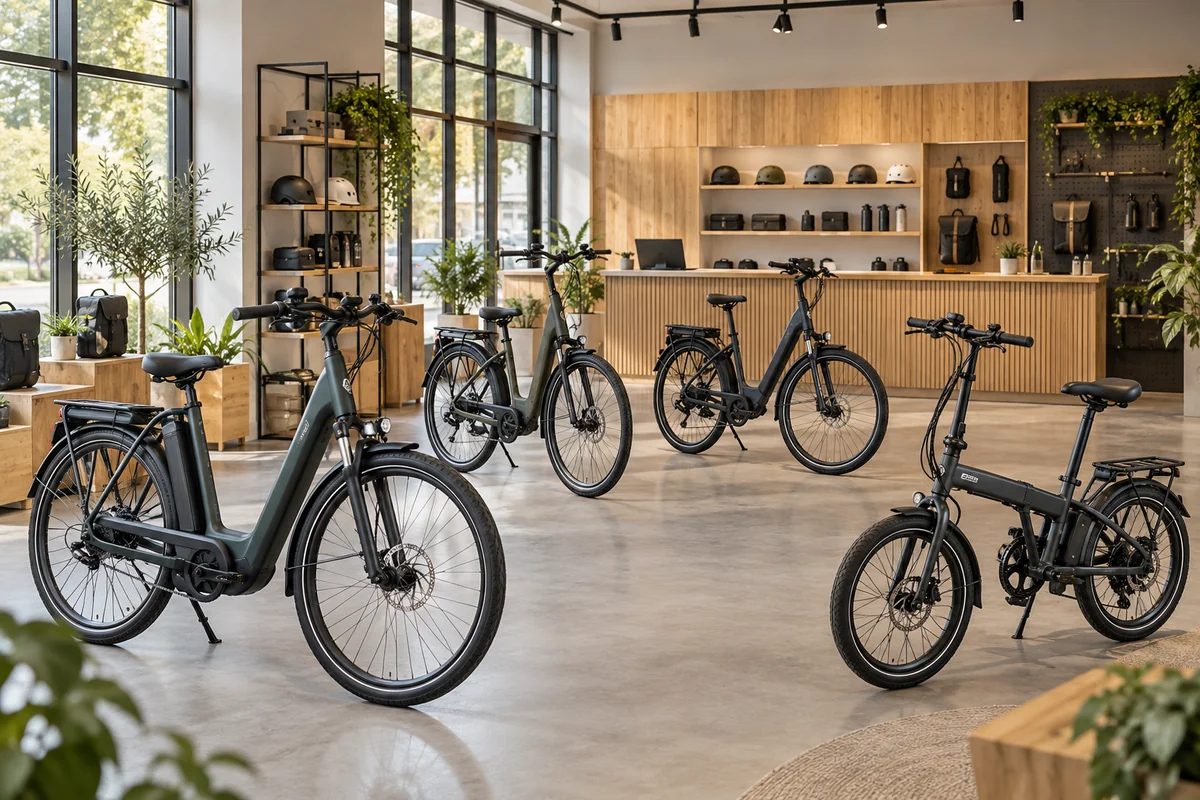
Before buying wholesale electric bikes, define the destination, intended use, model configuration and quantity. Compare suppliers against the same written specification, then confirm sample acceptance, documents, packaging, shipment terms and after-sales responsibilities. Keep model-specific conditions attached to every quoted figure.
01
Define the buying requirement before requesting prices
A wholesale electric bike order can serve very different businesses. An importer needs a product that can be supported through its distribution network. A retailer needs a clearly positioned assortment. A rental operator needs a configuration its staff can inspect and maintain. Start by describing that business requirement.
Write down the destination country, intended routes, rider profile, model shortlist and quantity per model. Include storage, transport and service constraints. A folding frame can be relevant to storage, but does not establish that a bike is light enough for a particular handling task. Compare the listed weight and confirm the folded dimensions.
For an operating fleet, begin with our rental e-bike selection checklist. For guest programmes, use the hotel and resort buying guide.
Plan an opening assortment from your own evidence
Before assigning units to the e-bike model shortlist, record customer requests, sales by product type, stock on hand and in transit, seasonality in your market, available cash and storage capacity. Keep separate lines for each model and revision. Ask suppliers to confirm model-level MOQ, mixed-order rules, replenishment conditions and timing; this guide does not state e-wildx stock, MOQ or lead times.
Use the dealer opening-stock planning brief to compare a cautious pilot with a larger proposed order using your own inputs. If sales history is limited, label the assumptions and set a review date before reordering.
02
Compare configurations, not only model names
Additional published e-bike models
The live catalogue also shows EB-AS-4835-01 lightweight assist, EB-F-3625-01-5 14-inch folding, EB-AM-4850-03 20-inch fat tire, EB-AM-4875-29-50 29-inch e-mountain, EB-AM-7248V full-suspension, FT-S-4850-01 aluminium fat tire, EB-AM-4815-10 26-inch fat tire and EB-AS-4814-20 350W urban references. Confirm whether each model is currently offered, then compare its exact revision, written specification and market documents before adding it to an order shortlist.
Ask for a written specification attached to the quotation. Battery capacity, brakes, drivetrain, lighting, tires, accessories and packaging can change what is included in the order. Identify which items are standard, optional or awaiting confirmation. Keep a version or date so a later revision is easy to recognize.
The following examples use the current published e-wildx model information. They are reference configurations, not a claim that every version is orderable in every country.
| Model reference | Listed motor | Listed battery | Net weight |
|---|---|---|---|
| P1 specifications | 350 W | 48 V 15 Ah lithium battery | 32 kg |
| F29 specifications | 750W | 48V 10.4Ah lithium battery | 26 kg |
| K1 specifications | 750 W (subject to final confirmation) | 48 V 13 Ah lithium battery | 29 kg |
| K7 specifications | 500W (subject to final confirmation) | 48V lithium battery; 10.4 Ah capacity to verify | 30 kg |
| M1 specifications | 400 W | 36 V 15 Ah lithium battery | 26 kg |
Source: the linked e-wildx product pages, checked 20 October 2026. “To verify” and “subject to confirmation” remain part of the stated specification. In particular, K7 capacity is not independently verified.
F29 model check: the linked product page title says step-through, while its source Product type field says “Electric off-road bicycle”; the source also lists pedals as “To be confirmed.” Ask the supplier to confirm the exact category, intended use and included equipment for the offered revision before assortment or destination review. A catalogue title does not establish local road eligibility. See the F29 product reference.
A larger listed motor rating is not enough to choose a vehicle or establish road eligibility. Compare the complete configuration against the intended use and destination requirements.
03
Turn specifications into useful comparison questions
Voltage (V) and amp-hours (Ah) describe different parts of a battery rating. Ah is a charge-capacity figure at a stated voltage; multiplying nominal voltage by rated Ah gives a calculated nominal energy figure in watt-hours (Wh). That calculation helps compare listed packs, but it does not show measured usable energy or predict riding range. Bosch eBike Systems explains the underlying electrical units in its battery terminology guide.
For the published examples, P1 is 48 V × 15 Ah = 720 Wh, while F29 is 48 V × 10.4 Ah = 499.2 Wh. Treat these as arithmetic from the stated ratings only. Before comparing a quotation, ask the supplier to identify the exact battery pack and confirm that the voltage, capacity unit, nominal rating basis and compatible charger apply to the quoted model revision.
M1 configuration question: its local reference lists a 36 V 15 Ah battery and a 48 V / 2 A charger, but does not confirm that pairing. Ask the supplier to identify the exact battery pack and charger, confirm the charger output and approved compatibility in writing, and provide the applicable charging instructions before approving the order. This is an unresolved source/specification conflict, not a finding that the parts are compatible or incompatible. See the M1 product reference and its model qualification note.
| Battery field | What it tells a buyer | What to confirm in the quotation |
|---|---|---|
| Voltage (V) | Nominal electrical potential of the pack; it is not a range or quality score. | Match the pack to the quoted motor/controller system and confirm the approved charger. |
| Capacity (Ah) | Charge capacity stated at a voltage; the Ah number alone is not a fair cross-voltage energy comparison. | Write the unit explicitly and request the battery model or pack identifier and its specification. |
| Energy (Wh) | A nominal comparison calculated as V × Ah when the stated ratings use compatible bases. | Ask whether Wh is a declared pack rating or a buyer calculation, and do not convert it into a promised range. |
The same approach helps with packaging. P1 lists 138 × 30 × 80 cm, and F29 lists 132 × 22 × 73 cm. Their simple outer-box volumes are approximately 0.331 m³ and 0.212 m³ respectively. This excludes pallets, clearance, stacking restrictions and loading arrangements; it cannot determine a container quantity or freight quote on its own.
Use the differences to ask better questions: Is the quoted battery the same one as the reference page? Do the carton dimensions describe the finished packed unit? Are accessories or spare batteries packed separately? Compare the P1 specifications and F29 specifications alongside the written offer. If a pack rating or charger pairing is missing or conflicts across documents, keep the value unresolved and request written confirmation before approving the configuration.
04
Clarify MOQ, model splits and branding
A minimum order quantity needs a scope. Ask whether it applies to the whole order, each model, each color or each customized configuration. An offer that accepts a mixed order may still have separate requirements for custom frames, packaging or artwork.
Describe the work you mean before using labels such as OEM, ODM or private label: applying your brand to an existing model, changing colors or components, or developing a different product are different scopes. Suppliers use these terms differently, so ask what each term covers for the specific model. Confirm whether branding extends to the frame, decals, carton, manuals or display; whether each item has a separate MOQ or setup charge; which artwork files are required; and who signs off on a sample or proof before production.
| Requested scope | Define it in the RFQ | Confirm in writing |
|---|---|---|
| Existing model, wholesale | Exact model and revision, standard configuration, quantity by model and color | Included equipment, available versions, MOQ basis, sample terms and order documents |
| Branding on an existing model | Logo locations, labels, carton, manuals or display items; provide artwork requirements where known | Which surfaces are possible for that model, separate minimums and charges, proof/sample approval and who controls final artwork |
| Changes to an existing configuration | Name each requested component, color or specification change and identify what must stay unchanged | Feasibility, configuration revision, cost and quantity effects, compatibility checks, document impact and validation responsibility |
| New or materially changed product | Describe the intended use, target market, required performance and which design decisions are open | Whether development is available, deliverables, schedule, engineering and validation costs, design/IP ownership and any exclusivity terms |
These rows describe buyer request scopes, not standardized definitions of OEM, ODM or private label and not a statement that e-wildx offers every scope. Suppliers use the labels differently. Have the supplier restate the agreed work, exclusions, approvals, costs and responsibility in the quotation and contract before treating a request as accepted.
e-wildx does not publish a universal MOQ or fixed branding lead time in this guide. Request the terms for your proposed model mix and quantity. Do not treat a sample arrangement as the minimum for a branded production order.
05
Compare the complete quotation
Place competing offers in the same comparison sheet. If one quotation includes different batteries, freight responsibilities or replacement parts, its unit price is not directly comparable with the others.
Qualify the supplier before paying a deposit
A product quote is only one part of a sourcing decision. Before paying for a sample or production order, identify the business entity and each party’s role, then match the proposed product and supporting evidence to the same written specification. A manufacturer, assembler, trading company or distributor can each be a valid commercial partner; the buyer needs a clear, documented account of who is responsible for each part of the order.
| Check | Ask for | Compare or verify |
|---|---|---|
| Contracting entity | Legal name and address for the quotation, contract, invoice, payment beneficiary and export documents | Reconcile differences and ask each entity’s role; use the relevant official company registry or a qualified local due-diligence provider |
| Payment milestones | Currency and payment method; amount/percentage and due trigger at each stage; supporting documents; named beneficiary; bank/FX charges | Reconcile the named payee against the contract and pro forma invoice; document any different payee and verify the explanation before paying. Record milestones and evidence; independently verify changed instructions. No standard split is implied. |
| Supplier and production role | Who designs, assembles, tests and ships the quoted model; which processes or components are outsourced | Confirm the production site and which party controls changes, quality records and buyer communication |
| Product control | Exact model/revision, written configuration and how component substitutions are documented and approved | Match the quotation, sample and available records to the same product scope; resolve differences before ordering |
| Quality and document evidence | Relevant inspection or release records, certificate/report identifiers and the process for recording deviations | Verify the issuer and scope independently where possible; a management-system certificate alone does not prove a particular model or batch conforms |
| Delivery and after-sales | Named delivery responsibilities, parts identification, claim process and written warranty/support scope | Compare responsibilities and exclusions across the offer, contract and support documents |
Ask every shortlisted supplier the same core questions. Resolve unexplained entity, product or document mismatches before commitment; for higher-value or higher-risk orders, consider an independent company check, site assessment or qualified product inspection matched to your risk and destination. A website, video tour, sample or certificate is one piece of evidence, not proof of every claim.
ISO/IAF auditing guidance describes risk-based controls for external providers. The U.S. Commercial Service also discusses third-party references and site visits when U.S. firms evaluate foreign representatives; that is U.S.-specific guidance, not a universal legal requirement. See ISO 9001 Auditing Practices Group: External Providers and U.S. Commercial Service: Evaluate Foreign Representatives.
| Quotation item | What to ask the supplier to specify |
|---|---|
| Vehicle configuration | Model, revision, battery, components, colors and included equipment |
| Quantity basis | Units per model and color, customization minimums and mixed-order conditions |
| Samples and approvals | Sample configuration, charges, review process and change approval |
| Delivery basis | Named delivery place, shipping responsibilities and excluded charges |
| Support | Parts identification, warranty scope, exclusions and issue-handling process |
Compare up to three supplier quotations
Use the wholesale e-bike quotation comparison worksheet to align the model revision, configuration, quantity, included items, delivery basis and exclusions before comparing prices. Keep missing or provisional figures visible; the worksheet does not calculate customs duty, taxes, freight or landed cost.
Ask what triggers the production schedule: deposit receipt, artwork approval, sample approval or final configuration confirmation. Record dates and dependencies in the order. A verbal delivery estimate without those conditions is difficult to plan around.
Check EU e-bike trade-defence measures before pricing
EU regulations impose definitive anti-dumping and countervailing measures on electric bicycles originating in China when the exact goods fall within their legal scope. Treatment can depend on the exporting producer and prescribed invoice information.
Ask an EU customs broker to confirm the current product scope, origin, exporter-specific TARIC treatment and invoice requirements before estimating landed cost. Record ordinary customs duty, anti-dumping duty, countervailing duty and import VAT separately. See Regulation (EU) 2025/120, Regulation (EU) 2025/114 and Access2Markets. This is a buyer prompt, not a classification or rate determination for any e-wildx model.
06
Agree what the sample review should establish
Define the sample configuration before it is dispatched. Record the model, battery label, charger, equipment and any differences from the intended production version. Agree who will review it and which findings need a supplier response.
For a fleet trial, evaluate access, handling, storage and the proposed daily workflow on representative routes. Record the conditions used for any range observation. For a retail order, check how the bike will be assembled, presented and serviced. Use qualified personnel for mechanical and electrical work.
Record range evidence for a fair comparison
A range figure is useful for procurement only when its basis is clear. Ask the supplier to separate a stated specification from a measured result and provide the test method for the exact model revision and battery pack. Bosch eBike Systems notes that rider, assistance mode, drive unit, battery, temperature, wind and riding surface can affect range; these factors make an unexplained number difficult to compare.
For a supplier test, request the rider or total test load, assistance mode and speed, route surface and elevation, ambient conditions, tyre specification / pressure, stop-start pattern, charge starting point, measurement method and the stated end point. Record any fields the supplier cannot provide as unknown rather than filling them with assumptions. For a buyer pilot, use representative routes and operating load, record the same available conditions and the observed result, then agree a separate acceptance threshold before relying on it for fleet planning. A pilot observation does not convert the published P1 or F29 figure into a guarantee.
Compare the published P1 40–50 km electric-only range reference and F29 24–30 km electric-only range reference with those qualifications in view; the captured product sources state no test conditions for either figure.
Write an acceptance or change list after the review. A sample with a particular component does not authorize an unrecorded substitution in the later order. Confirm the final specification and any allowed alternatives before production.
Sample approval and shipment release are separate decisions: the sample records one reviewed unit; a pre-shipment review checks an agreed scope against the actual order batch. Before production, write down the units or cartons to review, checks and methods, acceptance criteria, required evidence, deviation owner and release authority. Agree those terms with the supplier; do not assume a universal sample size or acceptance limit.
Use the commercial e-bike and scooter pre-shipment review & release worksheet to record the order reference, inspection scope, checks, deviations and final release decision. It is a buyer worksheet, not an e-wildx inspection record or technical test standard.
07
Check documents against the exact configuration
Request a document list for the destination and product being quoted. Match the manufacturer or certificate holder, model identifier, battery and charger references, report scope and relevant configuration. Ask how you can verify the issuing body or listing. Use the model-document verification register to track requests and open mismatches.
Check EU WEEE responsibilities for the exact product
Before placing an e-bike on an EU market, check the finished product, company role and each destination country with the national WEEE register. Directive 2012/19/EU is open-scope for EEE, subject to exclusions. The means-of-transport exclusion excepts electric two-wheel vehicles that are not type-approved; this wording is not a determination that any e-wildx model is in scope or exempt.
Ask who is the producer under that country’s rules, whether registration and reporting are required, which compliance scheme or financing applies, and what distributor take-back and marking requirements apply. Keep WEEE separate from battery EPR / the Battery Passport and PPWR packaging EPR. Download the EU WEEE importer review worksheet. Confirm the exact product and route with the national register or a qualified adviser.
Official sources: EUR-Lex: WEEE Directive 2012/19/EU; Your Europe: WEEE responsibilities.
Keep three checks separate: (1) evidence for the complete e-bike and its intended market/use; (2) any distinct obligations for the battery placed on that market; and (3) dangerous-goods evidence and carrier acceptance for the actual shipment. A battery transport test summary does not by itself establish that the complete bicycle meets destination-market requirements.
Prepare for the EU battery passport requirement
For the EU market, the European Commission identifies e-bike batteries as light means of transport (LMT) batteries. Article 77 of Regulation (EU) 2023/1542 provides that each LMT battery placed on the market or put into service from 18 February 2027 must have an electronic battery passport. Confirm the category of the exact finished battery and the responsible economic operator for the transaction; this does not establish readiness for any e-wildx model.
Ask the supplier to map the exact battery model and individual-battery records to the Commission’s current LMT data-point guidance, identify the source evidence and data owner, explain the battery-to-vehicle identifiers and QR/passport access, and document the update and correction process. A manufacturer, supplier or service provider may be authorized in writing to create or update passport data, but the Commission FAQ says the Battery Passport must be registered in the DPP Registry by the economic operator that places the battery on the EU market. Written delegation does not transfer that operator’s ultimate responsibility. The Registry became operational on 20 July 2026 and the Commission provides a test environment and user guide. Not every data field applies to every battery or at the same date; check the current guidance and later requirements.
Use the EU LMT battery-passport readiness brief for the supplier discussion. Read the EU Batteries Regulation, the Commission’s Battery Passport overview, official FAQ and August 2026 data-point guidance. Use the Commission’s DPP Registry user guide and Registry test environment to understand the registration workflow; the helpdesk covers technical onboarding and Registry functionality, not policy interpretation. This is EU-specific buyer preparation, not legal advice or confirmation that an e-wildx battery is in scope or ready.
Does a UN 38.3 test summary prove an e-bike is compliant for sale?
No. It is transport-safety evidence for a specified lithium battery type. It does not, on its own, establish that a complete e-bike or battery meets every requirement for sale or operation in a destination market. Match each document to the exact product or pack and check market rules separately.
In the EU, official importer guidance describes checking product conformity assessment, technical documentation, marking, traceability and user information; Regulation (EU) 2023/1542 sets separate importer checks for batteries. Treat these as EU-specific references, then check current rules and the role you occupy in the destination supply chain: Your Europe: general product compliance and importer responsibilities and EUR-Lex: Batteries Regulation, consolidated text.
For each file, record the exact model, component or battery identifier it covers, the revision or production range, issuer, scope and verification route. For example, the local P1 reference page is a product-information record, not evidence of destination approval. Tie documents to the quoted production configuration rather than relying on a model-family name alone.
UL Solutions describes UL 2849 as an electrical-system evaluation for e-bikes. A battery-only statement does not establish that the complete system is covered. See UL Solutions’ explanation of the certification scope. If a supplier claims UL certification, UL explains how buyers can check a product’s UL identifier in its Product iQ database and distinguishes a certified battery or charger from a certified micromobility device; see UL’s e-bike certification verification guidance.
Likewise, the certification names displayed on a general supplier homepage do not prove that every model or configuration is covered. Obtain the applicable evidence before advertising a certification. Destination requirements and local operating rules need a current, model-specific review; this guide and worksheet do not establish which approvals a market requires or whether any e-wildx model is approved.
Trace the e-bike frame, battery and revision records
Ask how each e-bike frame serial or batch ID maps to the exact model/revision, frame and drive configuration, battery-pack identifier, production lot/date, inspection evidence and shipment documents. Confirm where the identifier appears on the bicycle and carton, how the records can be retrieved by purchase order or shipment, and how an accepted battery or component substitution is documented.
Before ordering, agree a named contact and escalation path for safety or field incidents, including how affected serial/batch ranges and corrective actions are communicated. For U.S. consumer products, review the CPSC business reporting guidance. Requirements depend on destination, product and party role; confirm local duties with a qualified adviser. Capture the supplier’s process in the pre-shipment review worksheet.
Prepare the EU packaging and EPR record
For each bike configuration, list the unit carton, frame/wheel protection, accessory packs and transport packaging. PPWR packaging duties depend on the package and market flow. Record the responsible party separately for each destination rather than assuming battery EPR or product documents settle packaging obligations.
The buyer record helps tie supplier packaging facts to the bike revision and country flow. Download the EU packaging market-entry record. The regulation applies from 12 August 2026; national registration and implementation steps are phased. Confirm current requirements for the transaction with the relevant authority or a qualified adviser.
08
Discuss shipment preparation before fixing the delivery plan
Ask whether batteries are installed, packed separately or shipped as additional spares. Request packed dimensions, gross weight, assembly state and a proposed packing list. Discuss shipment acceptance and required documents with the transport provider for the actual route.
IATA’s lithium-battery guidance explains the role of a test summary for the battery type under UN 38.3. It is a starting point for questions, not a substitute for the current carrier and shipment requirements.
Prepare one shipment brief for comparable freight quotes
Freight quotations need the shipment as packed, the route and the delivery scope. Ask the supplier for final package data rather than pricing from product-page net weight or dimensions. Send the same brief to each forwarder and keep unknown values open.
| Shipment input | Provide or request |
|---|---|
| Goods and configuration | Exact model/revision and quantity; number of bikes and any spare batteries or chargers; whether each battery is installed, removed or separately packed; battery identifier and rated Wh from the supplier’s records. |
| Packing and collection | Final outer dimensions and gross weight for each carton, pallet or other package; package count; assembly/packing state; collection address or named pickup point; cargo-ready date and any site access or loading constraints. |
| Destination and service scope | Named port, terminal, warehouse or delivery address; preferred transport mode or alternatives; whether the quote is port/terminal/warehouse/door delivery; receiving hours, unloading and appointment needs; target shipping window. |
| Battery and carrier review | Documents and shipment details the supplier can provide; the carrier/forwarder’s written acceptance decision, required packing and documents for this actual battery configuration and route, plus the party responsible for submitting them. |
| Quote basis and charges | Currency, quote date and validity, route and estimated transit basis; separately itemize origin handling/export services, battery or dangerous-goods handling if applicable, main carriage, insurance, destination handling, clearance, duties/taxes, final delivery, unloading and storage. Mark each amount quoted, provisional, excluded or not applicable. |
| Trade and delivery responsibilities | If the sale uses an Incoterms® rule, write the rule, exact named place/port/point and edition in the contract and quote. Ask who arranges and pays each leg, clearance, insurance, unloading and destination charges; do not compare a three-letter term without its named place. |
Battery transport requirements depend on the shipment configuration, mode and carrier. IATA’s 2026 lithium-battery guidance is a current air-transport reference; ask the responsible shipper and carrier to confirm the rules and acceptance for the actual consignment. For a sale using Incoterms®, ICC explains why the named place or port and stated edition matter to delivery, risk and costs in its Incoterms® 2020 Q&A.
Use the wholesale quotation comparison worksheet to collect the same route, cargo, delivery and charge-status information from each supplier or logistics provider. It does not calculate freight, customs, tax, landed cost or confirm dangerous-goods classification.
Separate dispatch readiness, transport time and destination clearance in the delivery plan. Clarify the parties responsible for insurance, duties, local handling and final delivery. No shipping rate, container count or fixed arrival time is implied by the carton figures above.
09
Agree support responsibilities before placing the order
Discuss the support process as part of procurement. Ask which party performs diagnosis and repairs, what evidence is needed for a claim, how replacement parts are identified, and how freight and labor are handled. Record warranty coverage and exclusions for the actual order.
Build a parts discussion around the chosen configuration: brake components, tires and tubes where applicable, drivetrain parts, display, controller, battery and the correct charger. Confirm compatibility by part reference. Similar-looking plugs or the same nominal voltage do not establish interchangeability.
Compare warranty coverage and claim handling
Do not compare warranty periods as a single number until you know what each offer covers. Request the written schedule for the exact model revision and intended business use. Ask the supplier to define the start date and coverage separately for the frame, motor, battery, controller, display, charger and included equipment, where applicable. Confirm whether wholesale, rental, tourism and other commercial use are included or excluded.
| Term to compare | Ask the supplier to define |
|---|---|
| Coverage by component | Covered parts, coverage period, start-date event, applicable purchaser and any separate battery terms. |
| Battery claim criteria | How manufacturing faults are distinguished from capacity loss or normal wear; any capacity threshold, test method, evidence and exclusions that apply. |
| Use and exclusions | Whether commercial, rental or shared use is covered; required maintenance; and exclusions for wear, damage, storage, modifications or non-approved equipment. |
| Claim process | Claim contact, reporting window, required model/serial and order details, photos or diagnostic evidence, who assesses the claim and what happens to a returned part or battery. |
| Remedy and cost | Repair or replacement options, parts availability, labor, diagnosis, return and replacement freight costs, and any response or resolution target agreed for the order. |
Put the final terms, exclusions and process in the order documents. Keep written warranty coverage separate from spare-parts availability, paid repair support and any response target; one does not establish the others. There is no single warranty duration or commercial-use term established by this guide. e-wildx order-specific coverage and support must be confirmed in writing.
For distributors, identify how dealers will report a fault and obtain the right information. For fleets, agree how a vehicle will be taken out of service and returned to operation. e-wildx can discuss order-specific support arrangements; this article does not promise a fixed warranty period or local repair service.
Prepare a dealer receiving and handover record
After delivery, the importer or dealer has a separate task from the supplier’s sample approval and pre-shipment release. Before the order ships, request the exact model/revision assembly instructions, service information and any dealer qualification or authorization requirements. Agree which items the supplier will provide and how a mismatch or damaged unit should be escalated.
Use a receiving record to link the physical unit to the order and to identify open items before setup or customer handover. The record can capture identity, configuration, included items and documents, visible condition, required follow-up and the dealer’s disposition. Do not turn a general template into a technical inspection protocol: procedures, torque values, electrical checks and road tests must come from the manufacturer’s instructions for that model and be performed by suitably qualified personnel.
| Record field | What to capture |
|---|---|
| Unit and order identity | Model/revision, unit serial or batch reference, purchase-order line, delivery date and dealer location. |
| Receipt and configuration | Carton/visible condition, battery and charger identifiers, controls/configuration where documented, included accessories and missing or mismatched items. |
| Documents and setup | Manual and service-document versions received; setup performed under the applicable instructions; outstanding supplier guidance or qualified-service requirements. |
| Issue and disposition | Observed mismatch or damage, evidence reference, supplier contact/response, hold or follow-up decision, responsible person and date. |
| Customer handover readiness | Required manual, charging/storage information, support route and unresolved product questions handed over; record the dealer decision and relevant order reference. |
Manufacturer dealer checklists are model-specific examples, not universal procedures. For instance, the Powabyke Dealer PDI Checklist assigns checks to its supplying dealer and carries its own model instructions; do not apply its component steps to an e-wildx bike. This record does not certify a product, replace a pre-shipment inspection or determine market eligibility.
Download a dealer receiving and handover record
Use this as an administrative record and attach or reference the current model-specific instructions.
Download the e-bike dealer receiving and handover record10
Prepare a dealer or distributor profile
A focused partner inquiry helps the supplier understand your business and the market you serve. Share the details you can confirm; identify estimates as estimates and leave unknown commercial terms open for discussion.
| Profile field | Useful detail to share |
|---|---|
| Business and channel | Company or store name, website or storefront, and whether you sell through retail, e-commerce, distribution, fleet, rental or another channel |
| Market | Country or region, area served and the customer groups you sell to |
| Product interest | Electric bike, scooter or both; models/configurations of interest and the reason they fit your assortment |
| Order direction | Indicative opening quantity and model mix, sample/demo needs and an estimated reorder outlook if known |
| Customer support | Your current assembly, service or repair capability, service partners and the technical information or parts support you need |
| Market requirements | Documents or configuration questions you want checked for the destination; state who will confirm local requirements |
| Timing and next step | Target evaluation or buying window, open questions and the best business contact for follow-up |
For current dealer program information, visit the official e-wildx Dealer Program page.
This checklist does not define e-wildx dealer eligibility or promise territory protection, pricing, MOQ, credit, stock, warranty coverage or local service. Ask which cooperation model and written terms are available for your market and selected products. For scooter-specific configuration questions, also use the electric scooter procurement guide.
Download the wholesale and dealer inquiry brief or continue to the complete product RFQ fields.
11
Use a complete RFQ brief
Wholesale inquiry brief
e-wildx wholesale inquiry brief

CONTACT FORM SUBMISSION (official E-WILDX Contact page checked 21 October 2026)
The current form has required Name and Email fields plus Country, Product Interest, and Comment or Message. Enter the destination and main product/model in the matching fields. Use Comment or Message for the company name, business type/channel, intended use, model/revision/configuration, indicative quantity and model mix, target timing, delivery location, and open questions. The Contact page asks buyers to include country, business type, products of interest, and estimated order quantity. Check the live form before sending in case its fields have changed.

BUSINESS CONTACT (for a B2B response)
Company / organization or trading name:
Business website, storefront or public company profile (if available):
Contact name and role:
Business email for supplier response:
Optional business phone / preferred contact channel:

Business type and sales / operating model:
Destination country and delivery location:
Intended use, routes and rider profile:
Guided tour or rental fleet (if applicable): departures per day, typical route/trip duration, group size, time between trips and staff inspection / service windows:
Models, configuration or revision, and quantity per model:
Pilot quantity, expected reorder volume and target timing:
Battery pack model / voltage / capacity (include units; supplier to confirm):
Charger model and compatibility with the quoted battery (supplier to confirm):
Motor, brakes, equipment and accessory requirements:
Electric-scooter configuration, if applicable (seat, folding, tire type/size, brakes, lights and included accessories):
Rental / shared-fleet access requirements, if applicable (lock, app, telematics or platform; exact compatibility to confirm):
Requested supply / partnership route (standard models, dealer, distribution, fleet, other):
Requested scope (standard model / brand an existing model / change configuration / product development / undecided):
Requested branding or configuration details (logo locations, colors, packaging, manuals, components, artwork status):
Supplier to confirm for this exact model and request (availability, MOQ, charges, approval steps, document impact and timing):
Documents needed for the exact model and destination:
Sample quantity and acceptance criteria:
Packaging dimensions / weight and carton or pallet requirements:
Spare parts, warranty and service expectations:
Supplier to confirm written warranty schedule by component, start date basis, commercial / rental-use coverage, battery claim criteria, exclusions, claim evidence and process, labor / freight responsibility, and repair or parts response expectations:
Preferred shipment basis / named location and delivery window:
DEALER / DISTRIBUTOR PROFILE (complete if relevant)
Company or store name and website / storefront:
Sales channels and customer groups:
Country / region and area served:
Current product range or relevant category experience:
Indicative opening mix, sample / demo needs, and reorder outlook (label estimates):
Assembly, service or repair capability / service partners:
Market documents or configuration questions to confirm:
Target evaluation or purchasing window:
Current dealer program information (review before applying): https://e-wildx.top/dealer/
Open questions or items requiring supplier confirmation:

Do not include tax IDs, identity documents, bank details or other sensitive records in an initial inquiry. Ask for the supplier's approved secure process if such records are later required.
Fit the inquiry to the live Contact form
Checked 21 October 2026: the current e-wildx form requires Name and Email and includes Country, Product Interest, and Comment or Message. Enter the destination and main model in the matching fields. In Comment or Message, add company name, business type/channel, intended use, exact model/revision and configuration, indicative quantity and model mix, target window, delivery location and open questions. The Contact page asks buyers to include country, business type, products and estimated order quantity. Use the wholesale inquiry template to prepare the message, then recheck the live form in case its fields have changed.
Fill in what you know and identify the open decisions. A specific brief lets e-wildx respond with suitable models, available configurations and a quotation basis. You can revise the brief after reviewing a sample or comparing the model specifications.
Buying electric scooters as well? Use the separate electric scooter wholesale guide so the scooter configuration and intended use are reviewed on their own terms.
Common buying questions.
How should an e-bike dealer plan an opening model mix?
Start with the customer requests and sell-through evidence available in your market, then shortlist by intended rider, route and bicycle configuration. Record each model revision separately and compare frame style, wheel size, battery and drive configuration, fit/handling needs, and the service parts your team can support. Set a pilot quantity from your own cash, storage and demand assumptions; ask the supplier to confirm model/color MOQ, mixing rules and replenishment timing in writing. Do not treat a broad product-family label as evidence that a configuration suits your customer. Use the e-bike model shortlist and opening-stock planning brief to document the decision.
What MOQ should I expect for wholesale e-bikes?
There is no universal MOQ stated here. Ask for the minimum per model, color and customization, whether a mixed order is possible, and whether sample and production terms differ.
Does a higher Ah battery automatically mean a longer range?
No. Compare voltage and capacity together, then ask for range conditions for the actual configuration. Nominal watt-hours do not predict distance without the operating conditions.
Does a motor rating prove that an e-bike is road legal?
No. Model configuration, assistance behavior and applicable destination rules must be checked. The listed rating alone is not an eligibility statement.
What makes wholesale e-bike quotations comparable?
First align the exact model revision and configuration, order quantities, color and branding scope, included equipment, documents, sample terms, delivery point, payment and after-sales responsibilities. List every exclusion or provisional figure beside the quote. Do not infer freight, duty or total landed cost when those items have not been priced and confirmed for the destination.
What payment terms should I verify before paying a wholesale e-bike order?
Ask each supplier to state the payment method and currency, amount/percentage and due date or trigger at every stage, the invoice or approval documents attached to each milestone, bank and currency-conversion charges, and the legal name of the payment beneficiary. Reconcile the named payee with the contract and pro forma invoice. Ask for the invoiced party’s written explanation of any difference and independently verify it before payment. If bank details or payment procedures change, confirm the request through a contact method already on file rather than details in the change message; as one example, the U.S. IC3 advises secondary-channel verification. Record the agreed milestones and evidence in writing. No universal payment split or method is promised; confirm terms for the exact order.
What should an importer verify about an e-bike supplier before paying a deposit?
Confirm the legal contracting and payment entities and each party’s role, the actual production or sourcing arrangement, the exact model and configuration, document scope, change approval, quality evidence, delivery responsibilities and after-sales terms. Verify company information using suitable independent sources, and resolve unexplained mismatches before commitment. The appropriate checks depend on the order risk and destination; this guide does not certify a supplier or product.
What should be attached to a purchase order?
The agreed configuration, quantity and color split, included equipment, accepted changes, delivery basis, required documents and after-sales terms. Identify the approved revision so both parties refer to the same order.
How can an importer verify an e-bike certification claim?
Match the claim to the exact product and configuration, identify the certificate holder and model or file identifier, and verify the active record in the certifier’s own database or verification route. A test report stating that a sample was tested to a standard is not the same as product certification or listing. Ask whether the record covers the complete e-bike electrical system, battery, charger or another component, and match model/revision, battery and charger references, certificate holder and any conditions or exclusions. UL 2849 addresses e-bike electrical systems; UL 2271 addresses batteries for light electric vehicle applications; UL 2272 addresses electrical systems for personal e-mobility devices and may apply to some scooter categories. These scopes are not interchangeable, and none is a universal market-approval label. For example, New York City has local third-party certification rules for covered devices and batteries; check the current rule for the exact market, product and transaction. Keep the issuer record with the quoted configuration and resolve mismatches before making a certification claim. This checklist does not determine legal requirements or establish certification of any e-wildx model.
What should I include in an electric bike dealer or distributor inquiry?
On the current e-wildx Contact form, enter your destination under Country and the main e-bike or model under Product Interest; Name and Email are required. Use Comment or Message for your company, sales channel, customer type, intended use, model/revision and configuration, indicative quantity/model mix, timing, service capability, destination-document questions and open questions. The form requests country, business type, products and estimated order quantity. Label estimates as provisional and ask e-wildx to confirm applicable eligibility, territory, MOQ, price and support terms; no terms are promised here.
Does approval of an e-bike sample confirm the whole production order?
No. A sample review records what was checked on the identified sample. For a production batch, separately agree the inspection scope, selection method, checks, acceptance criteria, evidence, deviation handling and release authority in writing. This guide does not prescribe a universal sample size or AQL.
Is the M1’s listed 48 V / 2 A charger confirmed for its 36 V battery?
No compatibility confirmation appears in the local reference. The listed battery is 36 V 15 Ah and the listed charger is 48 V / 2 A. Ask the supplier to identify the exact pack and charger, confirm their compatibility in writing, and provide the applicable charging instructions before approving the configuration.
Does the F29 reference establish a step-through or off-road category?
No. The product title says step-through, while the source Product type field says “Electric off-road bicycle”; pedals are also listed as unconfirmed. Ask the supplier to confirm the exact category, intended use and included equipment for the quoted revision. Do not infer local road eligibility from the title.
What test conditions should I compare for an electric-bike range claim?
Ask for the exact model revision and battery pack, rider or total load, assistance mode and speed, route surface and elevation, ambient conditions, tyre specification and pressure, stop-start pattern, charge starting point, measurement method and stated end point. Mark missing fields unknown. For a fleet decision, separately pilot the exact configuration on representative routes and load, and agree any acceptance threshold before relying on the result.
What warranty terms should a wholesale e-bike buyer compare?
Compare the written coverage schedule by component and model revision, when coverage starts, whether commercial or rental use is included, battery fault and capacity-loss criteria, exclusions and maintenance duties, claim evidence and process, remedies, labor and freight costs, and any agreed parts or response targets. Confirm the terms in the quotation and order documents; this guide does not set a standard warranty period.
What information does an importer need for an electric-bike freight quote?
Provide the exact model and quantity, battery identifier and shipment configuration, final packed package count, dimensions and gross weight, pickup point and cargo-ready date, named destination and delivery scope, preferred mode, and available battery documents. Ask each provider to confirm carrier acceptance and requirements for the actual route, state the Incoterms® rule with its named place and edition if applicable, and itemize quoted, provisional, excluded and not-applicable charges with quote validity and transit assumptions.
How can an importer estimate landed cost per electric bike?
Compare the same model configuration, quantity, currency and named delivery point. Add the goods amount and buyer-paid origin, transport, insurance, clearance, destination delivery and other charges once, then divide by the quantity in that scope. Keep duties and import taxes open until the destination broker or authority confirms the classification, valuation basis and rates. Record recoverable taxes separately from economic cost and track cash needed through delivery. Use the wholesale landed-cost planner to itemize quote scope and open assumptions; it is not a customs or tax calculator.
What traceability records should I request for a wholesale e-bike order?
Ask the supplier to explain how each finished-bike serial or batch identifier links to the exact model/revision, production lot or date, battery pack identifier where relevant, inspection records and shipment documents. Confirm where the identifiers appear on the bike and carton and how the supplier can retrieve records by purchase order or shipment. Agree a named contact and escalation path for safety or field incidents and how affected serial or batch ranges and corrective actions are communicated. For U.S. consumer products, review the CPSC’s business reporting guidance; duties differ by destination, product and party role, so confirm local requirements with a qualified adviser. Record the supplier’s traceability fields in the pre-shipment review worksheet.
U.S. CPSC certificate filing depends on product and entry
U.S. eFiling applies only when the exact imported finished consumer product is subject to a CPSC certification requirement. CPSC currently lists 8 July 2026 for most regulated imports and 8 January 2027 for products entered from a Foreign Trade Zone for consumption or warehousing. Confirm the responsible certifier, certificate data and CBP ACE PGA message-set method with the U.S. importer and customs broker; the responsible party can depend on the entry and product-knowledge roles. CPSC HTS references are guidance, not a complete applicability list. See the CPSC effective dates and importer resources.
What should an electric bike dealer record before customer handover?
Record the model and revision, unit identifiers, supplied battery/charger and included items, documents received, visible transport condition, setup status, unresolved questions and the dealer decision. Use the exact supplier or manufacturer assembly and service instructions, including any qualification or authorization requirements. A generic checklist does not set torque values, electrical tests or legal acceptance criteria.
Does the EU Battery Passport Registry hold the full e-bike battery record?
No. The European Commission’s current Battery Passport FAQ says the DPP Registry records registration information and metadata; the full Passport is hosted by the responsible economic operator or an authorized provider, which manages access. For an e-bike order, confirm who hosts the exact battery record, how it is kept available and corrected, and what happens if a service provider changes. Commission Implementing Regulation (EU) 2026/1778 sets Registry implementation arrangements. The FAQ says access rules for restricted Passport data are still pending a further implementing act, so verify the current status before agreeing data-sharing terms. See the EU battery readiness brief, Commission Battery Passport FAQ and Implementing Regulation (EU) 2026/1778. This does not establish e-wildx data-hosting arrangements or model readiness.
Does U.S. CPSC eFiling apply to every imported e-bike?
No. CPSC eFiling applies when the exact imported finished consumer product is subject to a CPSC certification requirement; the product label “e-bike” alone does not settle that question. CPSC lists July 8, 2026 as the general effective date for most regulated imports and January 8, 2027 for products entered from a Foreign Trade Zone for consumption or warehousing. For an applicable entry, confirm the responsible certifying party, certificate details and PGA message-set method with the U.S. importer and customs broker. CPSC describes the importer of record eligible to make entry as the importer for eFiling; in some cases an authorized broker may identify the owner, purchaser or consignee as responsible when the broker lacks product knowledge. Confirm the exact roles and entry with the broker. The CPSC HTS list is guidance, not a complete applicability list. See the CPSC certificate and eFiling effective dates and CPSC importer resources. This is U.S.-specific and does not establish that any e-wildx model is covered.
Can a U.S. importer bring in an e-bike sample without CPSC eFiling?
CPSC says products imported only as samples, not intended for distribution in U.S. interstate commerce or use by U.S. consumers, do not need CPSC product safety requirements. This is a narrow sample-only situation, not a route to sell or distribute a noncompliant unit. For an e-bike evaluation, document the exact model/configuration, intended test or display purpose, custody and final disposition; the importer may need to show at entry that it will not reach consumers. CPSC suggests documenting disposition and/or marking the sample unsuitable for sale or distribution. Confirm the facts and entry treatment with the U.S. importer and customs broker. If the unit may be sold, distributed or used by consumers, do not assume the sample treatment applies. See the CPSC eFiling FAQ.
What EU PPWR packaging checks should an e-bike importer make?
For an EU-bound e-bike order, map the exact product and shipment packaging by model/revision, including the unit carton, protective materials, accessory packaging and transport packaging. Ask suppliers for the material and component-weight data they hold, packaging revision, supporting documents for applicable packaging requirements and change notification. Then identify the responsible packaging producer/EPR party for each Member State from the actual sales and unpacking flow; it can depend on who first makes the packaged product or packaging available and who unpacks it as a non-end-user. The PPWR has applied since 12 August 2026, but national registers and implementation steps are being phased. Check current national registration, reporting, scheme and representative requirements with the competent authority or a qualified adviser. Keep packaging EPR separate from battery EPR and e-bike product compliance. Use the EU packaging market-entry record. See the PPWR, Commission implementation guidance and Commission packaging EPR information. This does not establish e-wildx packaging data or compliance.
What information should I give a customs broker to classify an imported e-bike?
Send the broker the destination and planned import date, exact model/revision, clear product description, intended function, current specifications, manual, photos/drawings and the way the goods will be presented at import. Include relevant drive/propulsion details, pedals and controls, dimensions/weight, battery/charger information, and a component list if the order is incomplete, unassembled or shipped as a set. Identify the country of manufacture and keep any preferential-origin question separate from tariff classification. Ask the broker to confirm the complete local tariff line, effective date, written basis and any separate duties, trade measures, permits or product rules. A supplier’s suggested HS code is a lead to review, not a confirmed code; do not transfer a code from a different model or jurisdiction. For repeat or material imports, ask whether a binding ruling is appropriate. Use the landed-cost planner’s broker handoff. See the USITC HTS explanation, EU Binding Tariff Information and CBP CROSS rulings.
Do EU anti-dumping and countervailing duties apply to electric bikes from China?
The EU currently has definitive anti-dumping and countervailing measures on specified electric bicycles originating in China. Do not assume every e-bike, supplier or shipment is treated identically: coverage depends on the legal product scope and origin, and the applicable exporter-specific treatment and invoice information. Before pricing an EU order, ask your EU customs broker to confirm current TARIC treatment for the exact model, legal origin and exporting producer; obtain the manufacturer identity, any applicable TARIC additional code and required commercial-invoice declaration. Keep ordinary customs duty, trade-defence duties and import VAT separate in landed cost. A ship-from country or supplier-proposed HS code does not establish legal origin or a measure rate. Do not apply these e-bike measures to electric scooters or assume any e-wildx model is covered. See the current EU anti-dumping regulation, EU countervailing-duty regulation and Access2Markets.
Does WEEE EPR apply to imported electric bikes in the EU?
Check the exact finished product, sales route, company role and each destination country. Directive 2012/19/EU is open-scope for electrical and electronic equipment, subject to exclusions. Its means-of-transport exclusion excepts electric two-wheel vehicles that are not type-approved, so such a product may remain within WEEE scope; this does not classify a particular e-bike. Ask the national register to confirm scope, the responsible producer, registration, reporting, financing and any distributor take-back duties. Keep WEEE separate from battery EPR / the Battery Passport and packaging EPR. Use the EU WEEE importer review worksheet.
Sources & further reading.
External references support the stated document questions; they do not certify an e-wildx product.
- IATA: shipping lithium batteries
- UL Solutions: e-bike electrical-system certification
- UL Solutions: how to verify e-bike certification claims
- CPSC: manufacturer-provided or recommended charger guidance
- Bosch eBike Systems: battery terminology and electrical units
- Bosch eBike Systems: eBike range factors
- IATA: 2026 lithium-battery guidance for shippers
- ICC: Incoterms® 2020 Q&A on named places and cost / risk allocation
How can a dealer compare gross margin across e-bike supplier quotes?
Enter your own net selling price and chosen per-unit cost basis for the same model, quantity and currency. Gross profit per unit is net selling price minus that cost basis; gross margin is gross profit divided by net selling price. Markup uses cost as the denominator: gross profit divided by cost. These measures are different, and this scenario does not include operating expenses or establish net profit. The wholesale landed-cost planner helps estimate buyer-entered import cost; choose and confirm the cost basis with your accountant.
How do I calculate shipment CBM from e-bike carton dimensions?
Use the supplier-confirmed outside dimensions of each finished carton, in centimetres: length × width × height ÷ 1,000,000 = CBM per carton. Multiply by the number of cartons of that size and add each separate carton type. Track units per carton and gross weight separately. Pallets, crates, overhang, stacking rules and carrier billing can change the shipment basis, so ask the forwarder to confirm final packed measurements and chargeable volume. Use the wholesale landed-cost planner packing record to organize those buyer-entered figures; CBM alone does not predict container capacity or freight cost.
For an EU e-bike order, what battery EPR checks should an importer make?
Check battery producer registration and extended producer responsibility separately from product conformity and the Digital Battery Passport. Regulation (EU) 2023/1542 requires producers to register in each Member State where they first make a battery available; Article 55 covers batteries incorporated into light means of transport and other vehicles. The responsible entity depends on the transaction and applicable legal definitions, so do not assume that the vehicle importer label alone settles the battery EPR role. For each destination, confirm the battery category, obligated producer, national registration evidence, scheme/PRO and reporting or collection arrangements with the competent authority or a qualified adviser. Use the EU battery readiness brief to record open questions, and check current national rules before sale. See Regulation (EU) 2023/1542, Articles 55–56.
What should an EU importer confirm about e-bike battery replacement before 2027?
For e-bikes placed on the EU market from 18 February 2027, Article 11 of Regulation (EU) 2023/1542 has requirements whose scope depends on battery category and product design. Confirm whether the exact pack is a portable or LMT battery and whether the product is in scope; do not classify from the “e-bike” label alone. For an applicable LMT battery, check the safe removal and replacement process for an independent professional and access to necessary specialist tools. Ask the supplier for revision-specific service instructions, compatible replacement packs, diagnostic/software conditions, price and availability period. Article 11(7) includes spare-part availability provisions for portable and LMT batteries, subject to its scope and timing. The Commission guidance is non-binding; verify classification and current obligations with the competent authority or a qualified adviser. This does not establish e-wildx model compliance. See the EU battery readiness brief, Commission guidance and Regulation (EU) 2023/1542.
How should I plan the production timeline for a wholesale e-bike order?
Ask the supplier to map the exact e-bike revision from specification and artwork approval through component readiness, production, inspection, documents, dispatch and estimated arrival. Identify the clock-start event and record dependencies such as battery or drive-unit confirmation, color/branding approval and packaging artwork. Clarify whether the estimate includes inspection, export preparation, carrier booking and transit, and whether days are working or calendar days. Use your own launch date and forwarder input to set a buffer; a supplier’s generic capacity statement is not an order schedule. Confirm milestone estimates and update cadence in writing for the purchase order. Use the shared wholesale inquiry template to request this alongside the model, quantity and destination.
How can an e-bike dealer estimate a reorder point?
Calculate a starting threshold for each sellable e-bike model, revision and configuration: average daily unit demand × supplier-confirmed replenishment lead time in days + buyer-selected safety stock. Use representative sell-through data, and account for seasonal changes or limited history. Compare the threshold with inventory position—sellable units on hand plus confirmed inbound units expected before demand, less reservations, backorders and other commitments. Keep frame or battery variants separate when they cannot satisfy the same customer need. This is a buyer planning estimate, not a sales forecast or order quantity; check MOQ, color/model splits, cash and storage before ordering. Review actual sell-through and lead-time performance after each period. See the opening-stock planning brief.
What should an importer ask an e-bike supplier about the EU battery passport?
The economic operator that places the battery on the EU market must register its Battery Passport in the DPP Registry. A manufacturer or service provider may be authorized in writing to create or update passport data, but that delegation does not transfer the responsible operator’s ultimate responsibility. Confirm the exact finished-battery category and who places it on the market for the transaction. The Commission Registry user guide and test environment are available; this does not establish e-wildx model readiness.
Continue reading.
All resources ↗
FROM RESEARCH TO YOUR NEXT ORDER
Bring your buying
brief to E-WILDX.
Share your market, intended use, model shortlist and target quantity.
Pingback: Choosing E-Bikes for a Rental Fleet – E-WILDX